English


 |
INTRODUCTION TO THE FACULTY OF INFORMATION TECHNOLOGY
1. History of formation and development:
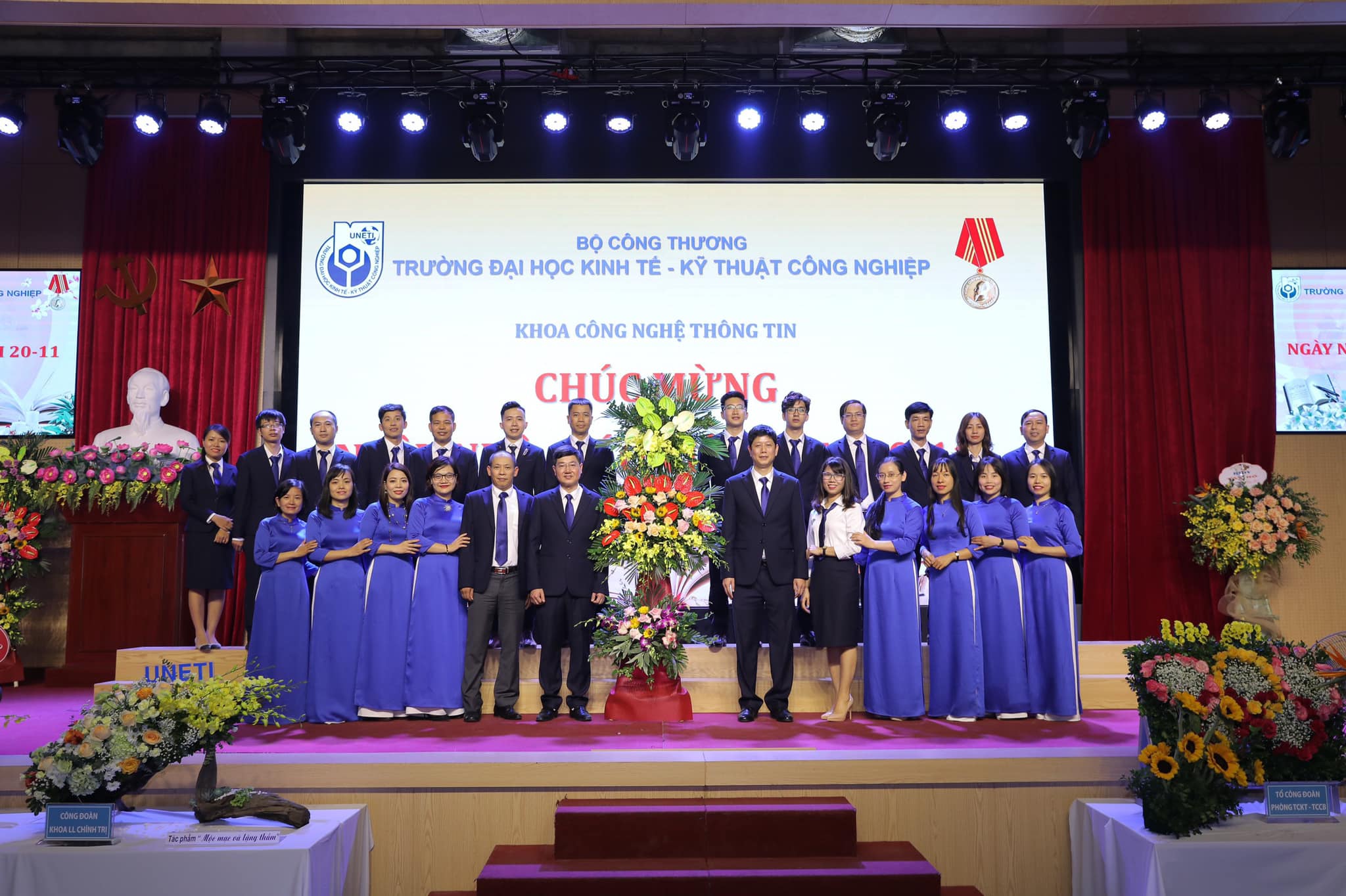
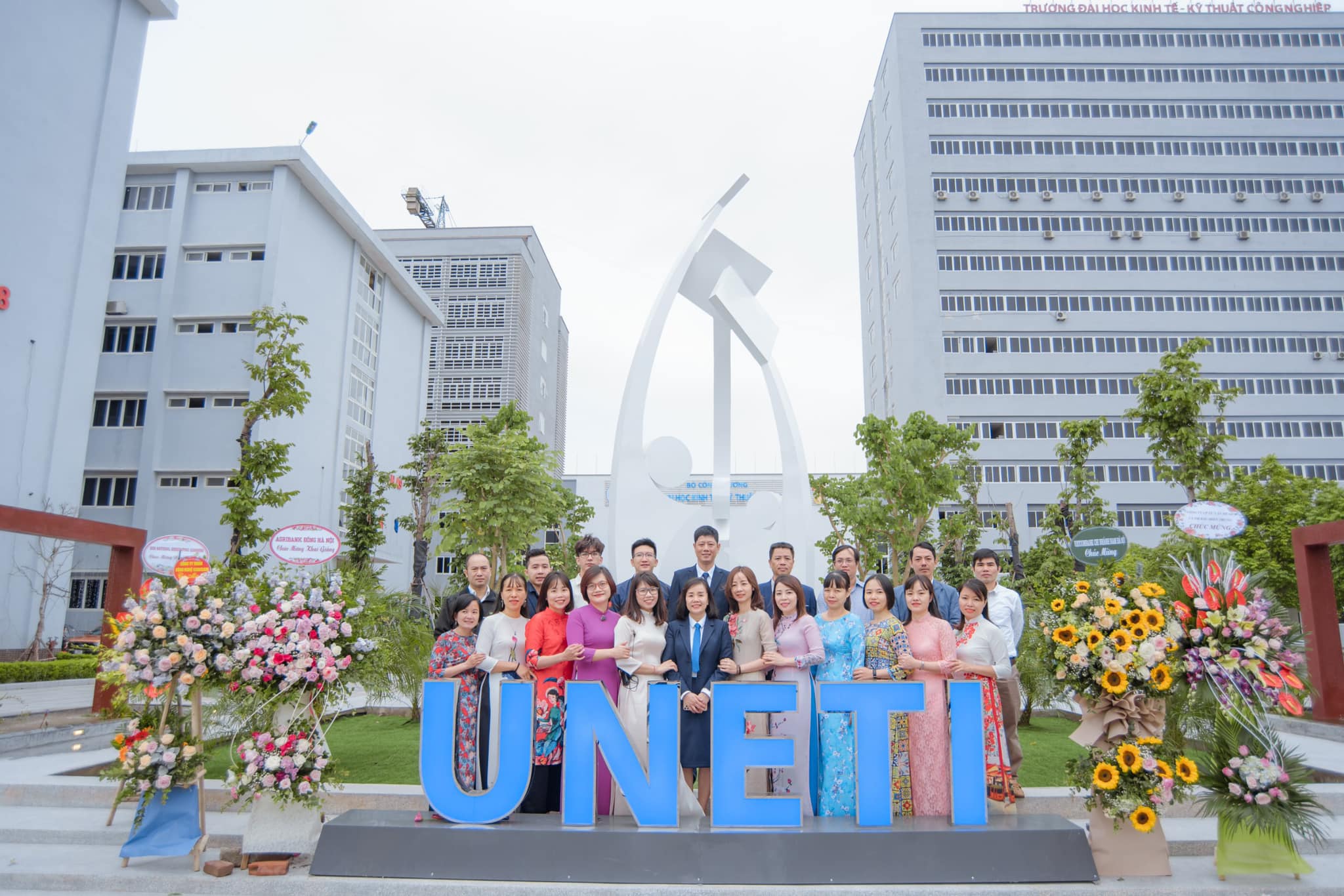
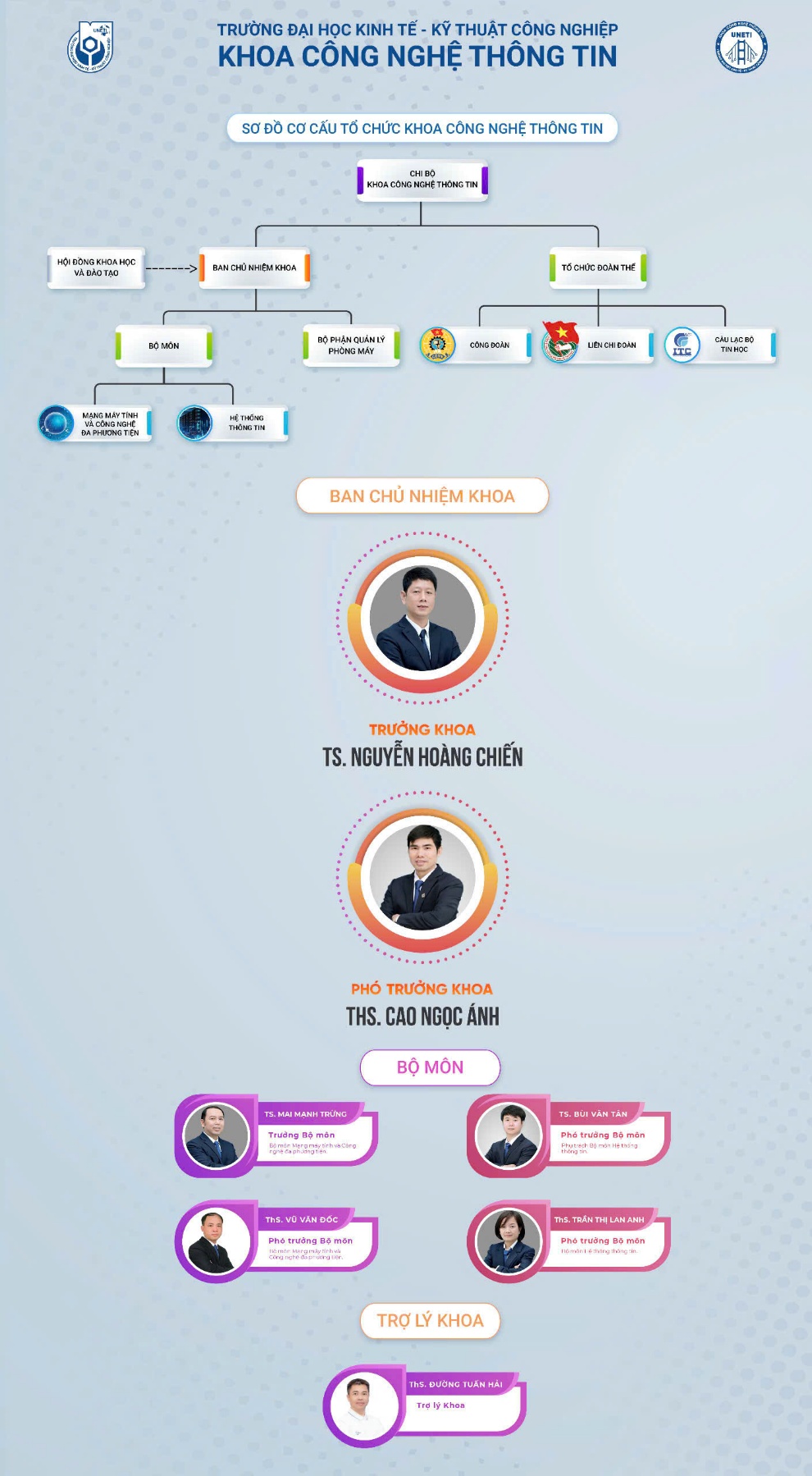
The Faculty of Information Technology, formerly the Informatics Division under the Faculty of Basic Sciences, was officially established in 2004 after several stages of upgrading. Along with the development of the University, the Faculty of Information Technology currently has more than 40 full-time lecturers (including 03 Associate Professors and 05 PhDs) and is organized into 2 divisions: Information Systems, and Computer Networks and Multimedia Technology. The faculty members possess strong professional expertise, extensive teaching experience, great dedication to the profession, continuously strive to improve their professional qualifications, and maintain solidarity, mutual support, and joint development.
The Faculty of Information Technology has increasingly become a reliable address, receiving significant social attention and becoming one of the faculties most chosen by candidates when applying to the University. Many graduates have achieved success and become key personnel in agencies and enterprises throughout the country.
2. Achievements:
Over more than 20 years of continuous innovation and development, the Faculty of Information Technology has affirmed its leading position in training information technology human resources with an application-oriented approach, applying training and scientific research outcomes to practical teaching and production. The faculty members of the Faculty of Information Technology have successfully carried out many scientific research projects at the Ministerial level, key projects, and institutional-level projects; participated in writing articles and publishing research works in reputable domestic and international scientific conferences and specialized journals. The Faculty has also promoted the development of creative ideas to create an environment for research and academic exchange among students.
To date, the Faculty of Information Technology has been awarded numerous Certificates of Merit from the Ministry of Industry and Trade, Certificates of Merit from the People’s Committee of Nam Dinh Province, and the Hai Ba Trung District Labor Federation. In addition, many individuals have been awarded the title of Emulation Fighter of the Ministry of Industry and Trade, and received Certificates of Merit from the Ministry of Industry and Trade, the Vietnam Industry and Trade Trade Union, and the People’s Committee of Nam Dinh Province for achievements in teaching and scientific research.
3. Organizational structure of the Faculty
4. Functions and duties:
Functions: The Faculty of Information Technology is a unit under the University of Economics – Technology for Industries, functioning as an advisory and assisting body to the Rector in implementing the following tasks: professional management of training in the Information Technology major; management of science and technology activities; development of content and curricula; compilation of textbooks and learning materials for teaching and learning purposes; management of lecturers in fulfilling assigned teaching duties in the Information Technology major.
Duties:
– Manage lecturers and learners of the Faculty of Information Technology in accordance with the decentralization of the Rector;
– Develop plans and organize the implementation of educational and training activities according to the University’s overall plan, including: developing training programs for majors and specializations in accordance with the regulations of the Ministry of Education and Training; organizing the compilation of detailed course syllabi; organizing the development of training programs, developing projects, compiling materials and textbooks in line with the University’s development orientation; conducting research to improve teaching and learning methods; developing and implementing methods for testing and assessing students’ learning and training outcomes, ensuring learners meet the published learning outcomes commitments and satisfy labor market demands;
– Develop plans and organize the implementation of science and technology activities and international cooperation; cooperate with science and technology organizations, production and business establishments related to the Information Technology field; mobilize enterprise participation in the Faculty’s training process;
– Develop plans for the development of the Information Technology lecturer workforce and facilities serving training and scientific research, strengthening conditions to ensure training quality;
– Develop plans and organize the implementation of political, ideological, moral, and lifestyle education for lecturers, employees, and learners; develop plans for training and professional development to improve qualifications and skills for lecturers and other employees of the Faculty;
– Organize the evaluation of managers, lecturers, and researchers within the Faculty and participate in the evaluation of managers within the University in accordance with the University’s regulations;
– Perform other tasks assigned by the Rector of the University.
5. Development orientation:
In the coming period, the development orientation of the Faculty of Information Technology is to aim at the goal of developing training activities for highly qualified, high-quality technical human resources with an application-oriented approach in line with social practice trends. To achieve this goal, the Faculty focuses on key innovation objectives with long-term orientation, including: continuing to develop a high-level lecturer workforce, ensuring both quantity and quality; expanding the scale and fields of training with in-depth specialization orientation to provide high-quality human resources in the field of Information Technology; developing students’ learning capacity, self-study, and self-research abilities; training technical bachelors with a solid scientific foundation, basic theoretical knowledge, and strong professional knowledge in Information Technology, Computer Networks, and Data Communications; possessing basic practical skills and teamwork skills; having the capacity to solve issues related to the field of training, such as the ability to write software programs; understanding the general operating mechanisms of computer systems, embedded systems and IoT, Artificial Intelligence, Blockchain Technology; mastering methods for building and optimizing system databases; applying knowledge of network administration, network security, wireless networks, multimedia communications, network programming, mobile programming, and web data applications to develop practical website projects; having the ability to apply advanced technologies from the region and the world into production practice to meet societal development requirements. Strengthening training cooperation with research institutes, universities at home and abroad, and enterprises to meet the demand for high-quality information technology human resources, contributing to affirming the position and brand of the University.
With the achievements attained and clear development orientation, the Faculty of Information Technology is proud to be one of the leading reputable training institutions in the field of information technology in Vietnam. We are committed to continuous efforts to train generations of talented technology engineers, contributing to the overall development of the country.
6. Contact information:
Hanoi campus: Faculty Office HA9.509, Alley 218/296 Linh Nam, Hoang Mai, Hanoi
Nam Dinh campus: Faculty Office NA2.1102, 353 Tran Hung Dao, Nam Dinh;
– Website: https://khoacntt.en.uneti.edu.vn
– Email: khoacntt@en.uneti.edu.vn
– Telephone: 024.38621504